
By Cristina Lopez-Gottardi Chao
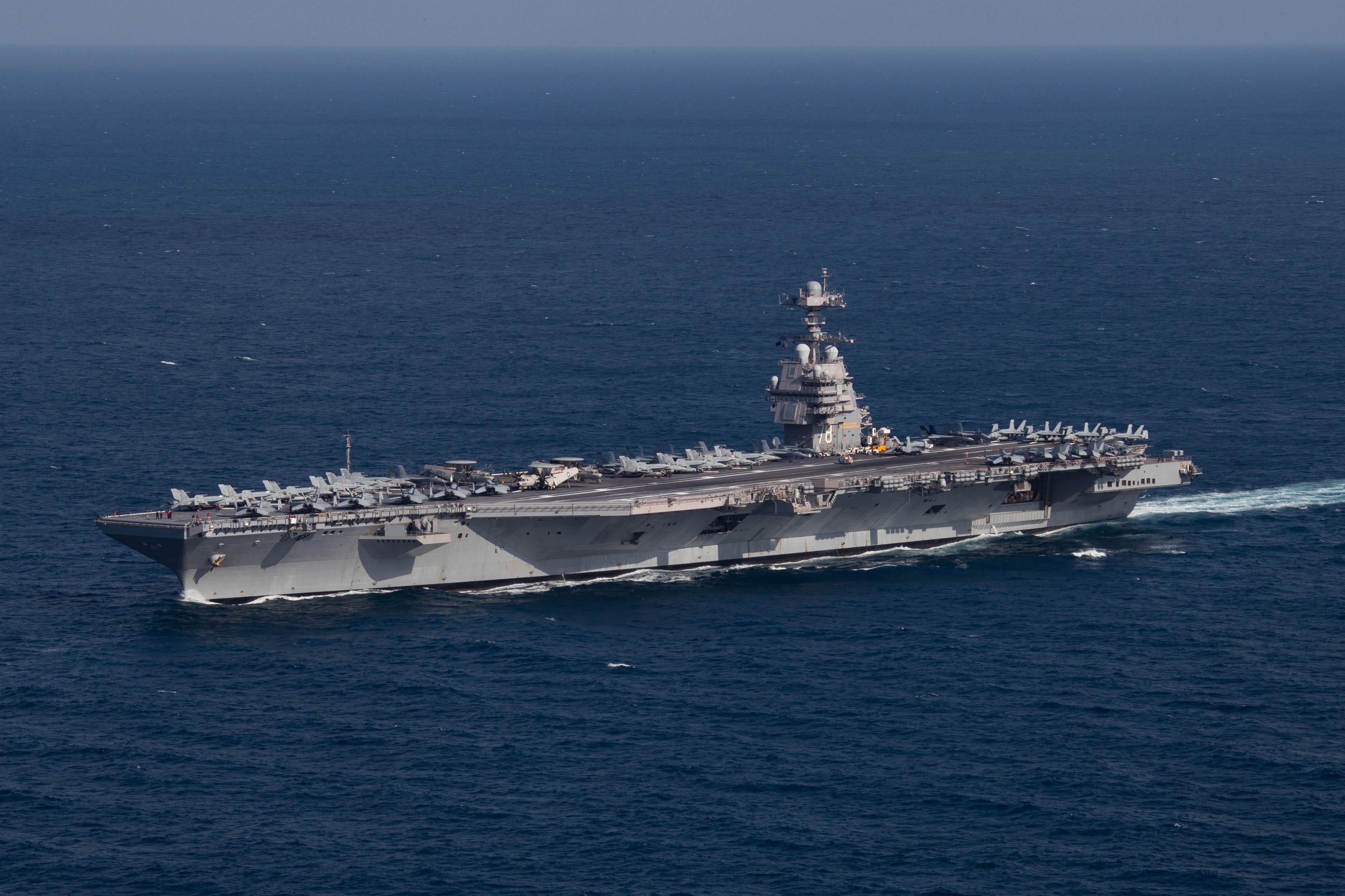
The Trump administration’s abrupt show of military force in the Caribbean, most notably strikes targeting alleged drug traffickers, has reignited longstanding debates over the boundaries of U.S. power abroad. In particular, the administration’s stance against Venezuela has raised pressing questions regarding the legality, strategic interests, and underlying calculus of American engagement in the hemisphere. After all, Venezuela is neither a major player on the world stage nor a vital supplier of U.S. energy. Yet Washington’s swift military build up near Venezuelan shores — including the deployment of the nation’s largest aircraft carrier — has fueled speculation about the prospect of a more assertive intervention. Such actions invite closer scrutiny of America’s evolving posture towards Caracas.
The Trump administration insists that those targeted in recent operations are more than criminals, labeling them “narco-terrorists” led by “terrorist” organizations smuggling “a deadly weapon poisoning Americans.” In line with this framing, the White House has designated 10 different drug cartels and gangs as “foreign terrorist organizations,” a move reminiscent of the George W. Bush administration’s post-9/11 designation of Al-Qaeda and its affiliates. Moreover, Trump declared Venezuela under President Nicolas Maduro a “national emergency,” a classification first established by President Barack Obama through Executive Order 13692 and later renewed under President Joe Biden.
Critics question the “national emergency” declaration, as well as the framing of Venezuela as a “narco-state,” noting that it is not a major producer of either cocaine or fentanyl. The reality, however, is more nuanced and complex. While most global drug production originates in Colombia, Peru, Bolivia, and China, Venezuela may play a facilitating role in narcotics trafficking across the region. Indeed, numerous members of Maduro’s inner circle have faced drug-trafficking charges in U.S. courts. In 2016, for example, a federal court in New York convicted two nephews of Venezuelan First Lady Cilia Flores for conspiring to traffic cocaine into the United States after their arrest by Drug Enforcement Administration agents in Haiti. More recently, in June of this year, former Venezuelan General Hugo Carvajal pleaded guilty to conspiring to import cocaine into the U.S. and to narco-terrorism charges. Though more intelligence is needed, these cases suggest possible links between elements of Venezuelan elites and transnational criminal networks.
Another issue raised by critics concerns the legality of involving the U.S. military in operations that have traditionally been the purview of law enforcement agencies, most notably the Drug Enforcement Agency established by the Nixon administration in 1973. This blurring of civilian and military boundaries and strikes against non-state actors in foreign waters invite complex questions about sovereignty and international law that national security lawyers and policymakers must now grapple with.
Yet framing and legality are only part of the story. Politically, and with respect to broader U.S. national security considerations, why is the Trump administration focused on Venezuela, and why now? The answer appears to lie at the intersection of democratic norms and domestic politics, ideology, and geopolitics.
To be sure, Maduro is a bad guy who has repeatedly violated democratic norms, committed serious human rights violations, suppressed political opposition, and most recently manipulated the 2024 presidential election. He has also presided over one of the worst economic collapses in modern history, plunging Venezuela —once one of the most prosperous oil-rich nations — into a state of mass poverty and failed state status. According to the Wilson Center, Venezuela’s GDP shrank by 70 percent between 2014 and 2021. “Unsurprisingly, that same period saw historic hyperinflation, reaching 300,000 percent in 2019, leaving citizens largely unable to afford basic goods and services.” Today, an estimated 70 percent of Venezuelans live in poverty and these conditions have triggered one of the largest migration crises in the Western Hemisphere. Over the last decade, 7-8 million Venezuelans have left the country, including roughly one million now residing in the United States.
Trump has long regarded Maduro as both a humanitarian and ideological adversary. As early as August of 2017, he declared that the United States had “many options for Venezuela… and, by the way, I’m not going to rule out a military option…We’re all over the world, and we have troops all over the world in places that are very, very far away. Venezuela is not very far away, and the people are suffering, and they’re dying.” Moreover, Trump appears well aware that Venezuela’s closest allies, including China, Russia, North Korea, Iran and Cuba, maintain adversarial positions towards the United States.
It is also worth noting that key figures in Trump’s current and past foreign policy circles, including Secretary of State Marco Rubio and former National Security Advisor John Bolton, have also long advocated for a hardline approach towards Venezuela, Cuba, and Nicaragua - the so-called “troika of tyranny.” For Trump, whose political brand has largely centered on border security and immigration control, this ideological framing plays well domestically. It reinforces the administration’s broader narrative about the dangers of socialism, a theme that resonates with his conservative base and a portion of Florida’s Latino electorate. At the same time, it revives Cold War-era interventionist rhetoric.
Indeed, the United States has a long and complex history of interventions in Latin America: Guatemala in 1954, Cuba in 1961, the Dominican Republic in 1965, Chile in 1973, Nicaragua in the 1980s, Grenada in 1983, and Panama in 1989. While many of these actions were justified through Cold War logic and strategy, others reflected broader patterns of U.S. interventionist tendencies in the hemisphere. These tendencies are historically rooted in policies such as the Monroe Doctrine of 1823, the Platt Amendment of 1903, and the Roosevelt Corollary of 1904.
Of course, interventionist actions have often been fraught with uncertainty. The 1989 invasion of Panama, for instance, successfully removed the murderous dictator General Noriega, but it wasn’t without controversy or complication. And Venezuela certainly presents its own unique set of challenges, including that any attempt at regime change would ultimately depend on the cooperation of the Venezuelan military.
Finally, for the Trump administration, there is also a broader geopolitical dimension—namely, to curb China’s growing influence in Latin America. In many ways, Venezuela may have emerged as a proxy arena for this strategic rivalry. Over the last decade, Beijing has invested billions of dollars across the region through its Belt and Road initiative, positioning itself as South America’s largest trading partner. Venezuela, rich in oil and somewhat isolated from Western finance, has leaned heavily on Chinese loans and investment. Against this backdrop, the Trump administration’s military presence in the Caribbean may function not only as a show of force, but also as an indication that Washington is no longer willing to completely cede its influence in the region. After years of relative abandon and empty rhetorical commitments to re-engage, this approach signals a renewed assertion of U.S. strategic priorities in the Western Hemisphere.
Ultimately, Trump’s actions in the Caribbean reflect a fusion of domestic political considerations and foreign policy objectives. The administration has framed these operations as efforts to counter narcotics trafficking, irregular migration, socialism, and China’s expanding influence – all core themes articulated in Trump’s reelection campaign and now identified as priorities of his first-year agenda. Whether the U.S. pursues further action in the region remains to be seen. But one thing is clear: Washington is messaging to both Latin America and Beijing that the Western Hemisphere has reemerged as a U.S. priority, and the era of disengagement may be over.
Cristina Lopez-Gottardi Chao is an assistant professor and chair of public programming at the Miller Center.
What’s behind any of these policies. ICE is going crazy in Charlotte