
Implausible deniability
Trump tries to slip the bonds of annoying law with his tariffs
By Paul B. Stephan
Most of the modern presidents (Franklin Roosevelt and later) faced international challenges that, they believed, presented them with a choice between doing the right thing for the country and honoring legal mandates. What distinguishes the current administration is not its willingness to slip the bonds of law when conducting foreign relations – almost every one since 1940 did that at some point or another – but its eagerness to advertise the fact. President Donald Trump’s approach to both tariffs and war demonstrates his felt need to unshackle the presidency when confronting adversaries, not just in the instance but across the board.
Earlier presidencies, including the first Trump administration, gave reasons why extant constitutional and statutory restraints did not apply to the international project at issue. They were not always convincing, but they signaled a desire to seem respectful of conventional ways of talking about international and foreign relations law. The tone was plausible deniability: The audience might think it was being conned, but couldn’t prove it.
Trump 2.0 instead embraces implausible deniability (a term I first encountered with respect to Vladimir Putin’s strategic thinking). The speaker uses conventional forms, including recognizable legal categories, but wants the audience to understand that he is not serious. The flimsiness of the argument is a feature, not a bug. The audience is on notice to expect the unexpected, to forget norms and stability, to understand that the speaker will do anything he feels he can get away with and expects to get away with everything.
Undergirding the turn to implausible deniability is a conviction that, for a wide range of bargaining contexts, the best approach is to put the adversary off balance with fearsome threats. It is a strategy that assumes deep adversity between the parties and attaches no value to building trust. Strength backed by courage and cunning does all the work, and successful deployment of power builds strength. “You don’t have the cards,” Trump told Zelensky, and nothing else matters. It is a conviction about the value of this approach that makes implausible deniability necessary.
This forensic style permeated the tariff saga. Trump, for reasons that specialists in international trade and economics find hard to understand, believes that the power to wield tariffs is a fundamental force for (American) good. The United States possesses the world’s largest market, the most dynamic economy, and the greatest array of opportunities for profit. Those who want access to this wonderful resource must pay for the privilege. Gains from trade do not enter into the picture. Deciding how to price this access should not depend on deals made ex ante, but rather on constant updating to see who has the cards.
Among existing laws defining the president’s authorities, the International Emergency Economic Powers Act (IEPPA), read opportunistically, comes closest to giving the president unbridled discretion to push and threaten other states economically, if not militarily. The president must determine the existence of an international emergency, a term without definition in either law or historical practice. Then a generous reading of the statute indicates that he can do just about anything.
Congress in 1976 sought to impose guardrails on the power to declare these emergencies by reserving for itself an override power. Either chamber could negate a presidential determination by a simple majority vote, with no possibility of presidential veto. Then the Supreme Court in INS v. Chadha, a 1983 decision, ruled this form of legislative supervision unconstitutional. It did not, however, conclude that authorities bestowed subject to this check became invalid with the demise of the legislative override. Accordingly, the president can find international emergencies whenever and wherever he wishes, with nearly insurmountable barriers to legislative rejection and little to no taste on the part of the Supreme Court to second-guess the president.
IEEPA, enacted in 1977, keys on the finding of an international emergency to authorize the president to “regulate” the possession and use of foreign-owned property, including its movement across our border (importation and exportation). No president ever thought to read into “regulate” the power to levy tariffs; in his first term, Trump did other bold things regarding trade but not this. However risky, if the move works, it unlocks nearly limitless power. By design, IEEPA permits immediate action without cumbersome process. And because it does not mention tariffs as such, it does not impose the limits on presidential discretion typically found in U.S. trade legislation, such as a cap on the amount of the levy.
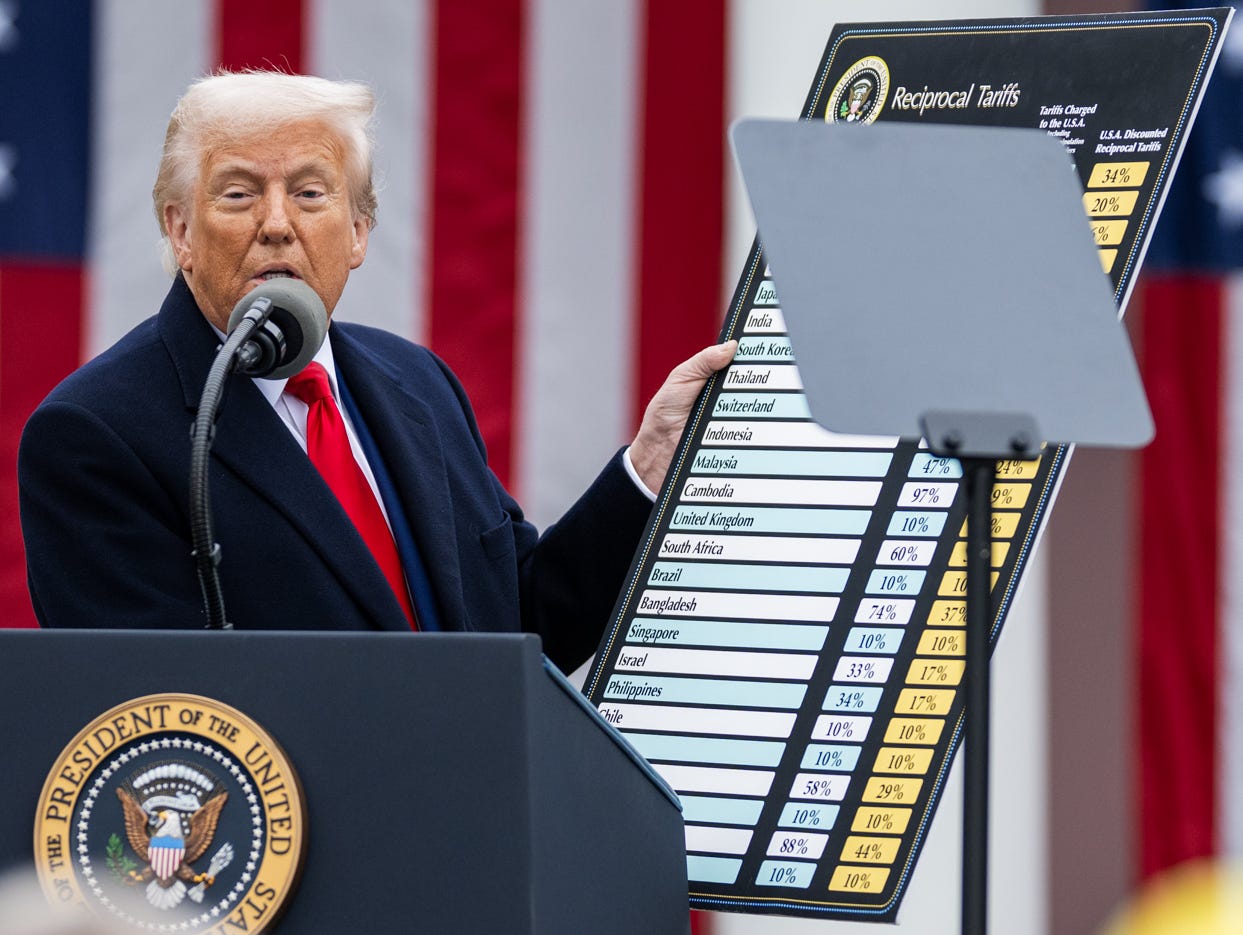
Armed with this implausible but not ludicrous gloss on the word “regulate,” the president proclaimed liberation day and threatened almost the entire world with stiff new charges on foreign goods destined for the U.S. market. Many states bargained for a better deal, and some got them. Still, the United States collected more than $100 billion in tariff surcharges (not the trillions that Trump claimed, but for him bombast and bullying go together) before the Supreme Court put a stop to it. In Learning Resources v. United States, the Court pronounced that IEEPA authorities do not extend to financial levies, whether tariffs or taxes. That six justices, including two Trump appointees, joined this ruling in the face of the generous treatment the president generally gets in foreign-relations disputes indicates how out of bounds his position was.
Within hours of the Court’s judgment, the president swiveled to a different and more confining authority, although one that does not require any prior process before taking effect. He determined that the United States faces, in the words of Section 122 of the Trade Act of 1974, “large and serious United States balance-of-payments deficits,” entitling him to impose a limited tax (15 percent, although Trump chose 10) on all imports of goods he selected for no more than 150 days. Never mind that the point of much of the administration’s international economic policy has been to weaken the value of the U.S. dollar, supposedly to make our exports more attractive overseas and the rest of the world’s imports more costly to U.S. buyers.
Nearly half of the U.S. states have sued to stop the Section 122 tariffs. They argue, with some reason, that the administration has not satisfied the statute’s trigger: There is no balance-of-payments crisis. The challenge they face is that the Supreme Court is reluctant to reject presidential determinations regarding foreign affairs. The Court did not, for example, question the existence of an “international emergency” in the IEEPA case, however thin the factual basis of the finding.
For the Trump administration, the real problems with this tool are size and duration. A 10 percent surcharge on imports will hurt but not kill the market for things Americans otherwise want to buy. Moreover, the statute requires the president to get permission from Congress before breaching the 150-day limit. Finally, it applies to categories of goods, rather than the identity of the importing country. That leaves little room for effective bullying.
Doubtless because Section 122 is not fit for purpose, the government has begun the process prescribed by Section 301 of the Trade Act, which allows a response to the unjustifiable policy or practice of a foreign country that harms U.S. economic interests. This measure requires investigations and consultations, but the end result is an open-ended power to punish malefactor countries with tariffs on their goods and fees and other restrictions on their imports of services (such as banking, shipping, and the like). Section 301 penalties face no hard cap, just an admonition that they should be proportionate to the harm inflicted on the United States. Moreover, they can last indefinitely.
Section 301 in theory might lead to the eventual erection of the same tariff barriers that the administration sought under IEEPA. The word “eventual,” however, does a lot of work. The process requirements take away the element of surprise, allowing the targeted countries to adapt, as well as adopt countermeasures. It dissipates the first wave of fear and turns bullying into a fairer fight.
None of this would matter if the ultimate goal of the policy were the creation of a stable tariff barrier to protect U.S. producers. The barrier, however, is not the point, but rather the overpowering of other governments. This administration believes that the United States is surrounded by adversaries that must be thwarted and tamed, not partners that can join in projects for the common good.
What happens if annoying laws actually get in the way? Over the past year, commentators worried that, if faced with Supreme Court obstruction, the president would just go his own way, abandoning even the pretense of justification. The good news is that, while complaining wildly, he has not actually done anything to defy the judiciary. Although he hinted at slow-walking compliance with the refund mandate, the government lawyers dealing with the responsible court (the Court of International Trade, a specialized judicial body based in New York) so far have cooperated with the presiding judge as he has worked on developing an effective mechanism to return the importers’ money. Time will tell.
More troubling is the prospect of a thwarted administration moving beyond economic bullying. Right after the Learning Resources decision came down, I expressed my concerns:
What worries me, and I suspect many, is that the president may shift his focus to other sources of power. If the president’s hallmark trade measures do not pan out, he may find his way to the wielding of another presidential authority less encumbered with legislative and judicial constraints. Learning Resources signals rather clearly that war powers are different and entail greater deference to the executive. With great possible payoffs and lower legal barriers, spectacular uses of armed force may result.
I regret to say that my fears have become the present reality. The president has done little to justify his partnership with Israel in waging war on Iran and seems not to appreciate the serious risks he has taken on. Unless things get far worse (an outcome not to be wished for), Congress will not rein him in. Nor does the Supreme Court have the right tools to obstruct the path taken, in the absence of legal instruments clearly barring his way. It seems far too likely that the president is about to learn, all too late, how little he knows about the art of the deal in foreign affairs.
Paul B. Stephan, the John C. Jeffries, Jr., Distinguished Professor of Law at the University of Virginia Law School, is a Miller Center senior fellow. He is an expert on foreign relations law, international law, comparative law, international business, international civil litigation, and international dispute resolution.