
Wikimedia Commons
By Steven M. Gillon
As strange as it sounds, former House Speaker Newt Gingrich may have something to teach Democrats about running against an unpopular president in a midterm election.
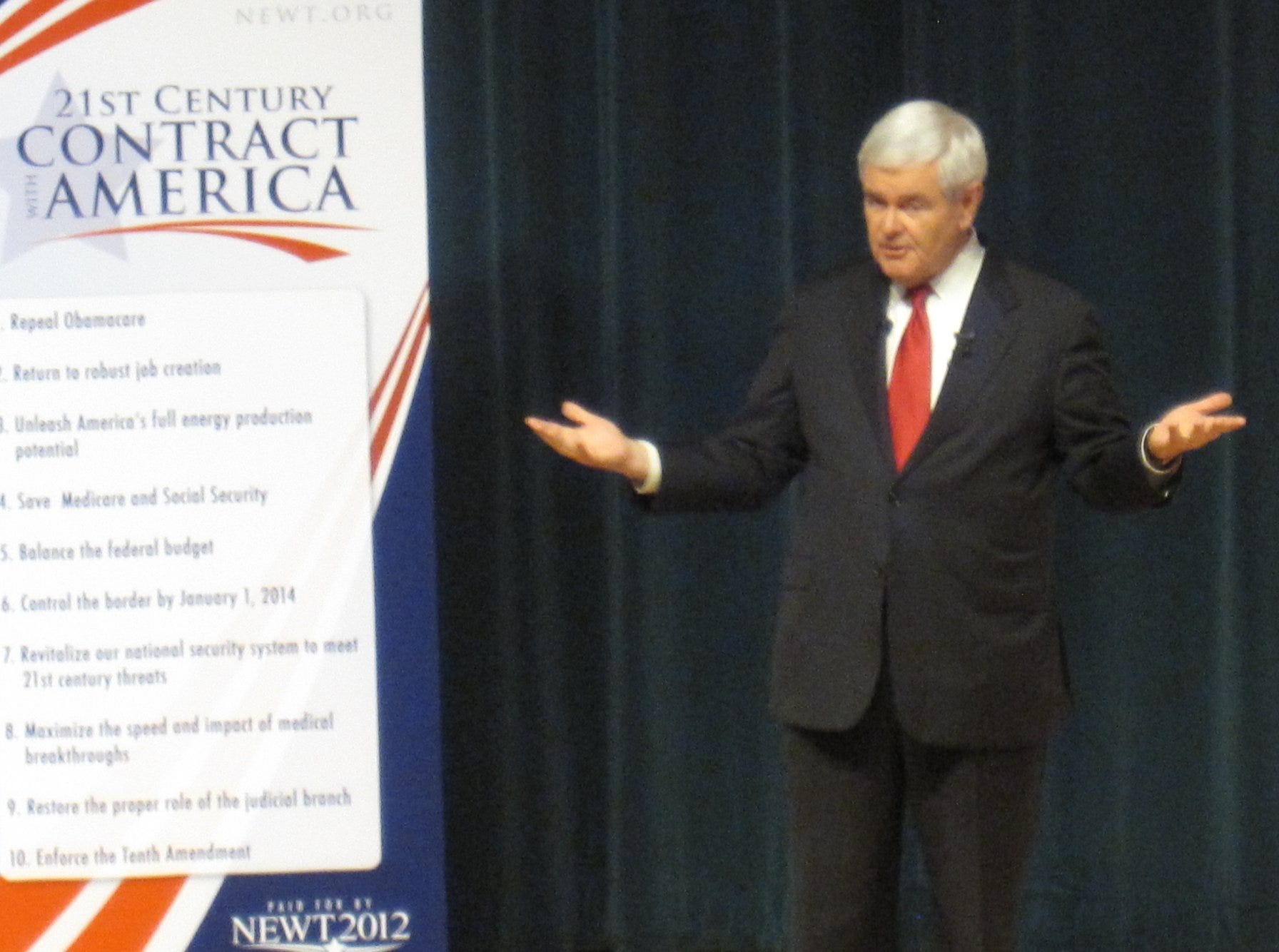
In 1994, with President Bill Clinton’s administration reeling after a failed health care plan, low approval ratings, and the drumbeat of scandal, Gingrich, the seven-time Republican congressman from Georgia, moved to nationalize the election by getting 300 Republican congressional candidates to sign a 10-point “Contract with America.” This political wish list, polished by consultants and tested in focus groups, pledged to trim government waste, cap welfare payments, raise military spending, and lower taxes.
There was nothing new in the contract. But it allowed the GOP to weaponize Clinton’s unpopularity and highlight the issues that united them. Gingrich stood down the right wing of his party that wanted to include controversial social issues like school prayer and bans on abortion. While those issues were popular with the party’s conservative Christian base, Gingrich believed they would alienate many of the moderate Republicans who he hoped would sign the contract. (Gingrich soothed anxiety among conservatives by promising to support school prayer and a ban on abortion; he just did not want them in his contract.)
A New York Times poll after the election revealed that 71 percent of Americans had never heard of the contract. But that missed the point. The purpose was to get Republicans to speak the same language and highlight issues that favored them over their Democratic opponents. It forced Democrats to fight on the GOP’s turf. Some of Clinton’s advisors recommend that he develop his own contract, but he refused. As a result, the Republicans were able to define themselves as the party of change and the Democrats as the defenders of the status quo.
Today, the Democrats could turn Gingrich’s strategy on its head. The timing is right. Gingrich organized a signing ceremony at the U.S. Capitol on September 27—six weeks before the election–at a time when voters were starting to pay attention to the election.
The current occupant of the White House is every bit as vulnerable as Clinton was in 1994. Clinton’s approval rating going into the 1994 midterms sat at 38 percent, which is exactly where Donald Trump finds himself today.
Like Republicans in 1994, Democrats should only include in their contract those issues that score over 60 percent in opinion polls. That would provide Democrats with plenty of ammunition. The contract could include extending the enhanced ACA tax credits (74 percent); allowing Medicare to negotiate drug prices (85 percent); banning members of Congress from trading stocks (86 percent); and capping super PAC donations (71 percent). Any proposal that fails to reach the 60 percent threshold should get excluded, no matter how much the people who support it may love it.
That means reining in their progressive wing by avoiding hot topics such as funding for Israel and trans rights. Like the Republicans in 1994, Democrats today are deeply divided. The contract does not need to end the debate between moderates, liberals, and progressives. Its purpose is to win the election. They can fight over priorities after they are in power.
The strategy worked in 1994, and far better than Gingrich ever anticipated. On election day, Republicans seized control of both houses of Congress for the first time in 40 years and defeated 35 incumbent Democrats. For the first time since Reconstruction, the Republicans controlled most southern governorships and Senate and congressional seats.
Hubris prevented Gingrich from achieving his larger goal of an electoral realignment. Although Republicans maintained control of Congress for the rest of his presidency, Clinton turned out to be an agile counterpuncher. He maneuvered the headstrong Gingrich, who became Speaker of the House, into two government shutdowns. Following the advice of pollster Dick Morris, Clinton announced his support for Republican goals–“The era of big government is over”–while promising to protect popular entitlement programs. In 1996, he staged a remarkable comeback and easily defeated Republican Senator Bob Dole for president.
The contract gave the Republicans the opportunity to govern but they blew it. Democrats should use the same strategy in the 2026 midterms.
Steven M. Gillon is a Miller Center senior fellow, former scholar-in-residence at The History Channel, and emeritus professor of history at the University of Oklahoma.